
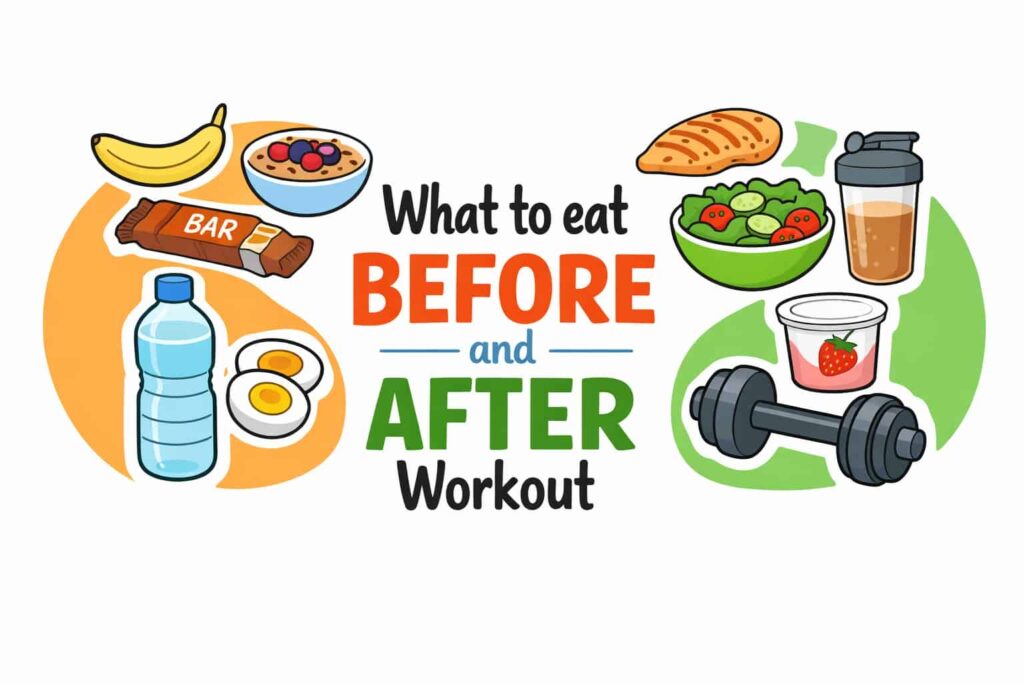
If you train hard but ignore your nutrition, you are limiting your results. What you eat before and after a workout directly affects your energy levels, strength output, muscle growth, fat loss, and recovery speed. Exercise creates stress on the body. The right nutrients help you perform better during training and rebuild stronger afterward. Whether your goal is building muscle, increasing strength, or losing fat, understanding pre-workout nutrition and post-workout nutrition is essential for long-term progress. This guide explains what to eat before and after a workout using simple science and practical strategies you can apply immediately.
Why Pre-Workout and Post-Workout Nutrition Matters
Training creates controlled stress inside your body. When you lift weights, run, or perform high-intensity workouts, your muscle fibers experience microscopic damage. At the same time, your body uses stored glycogen (carbohydrates stored in muscle) as fuel. You also lose fluids and electrolytes through sweat.
Without proper workout nutrition, your performance drops, recovery slows, and muscle growth becomes inefficient. The right balance of protein, carbohydrates, and fluids ensures that your body can perform at its best and rebuild stronger after each session.
Pre-workout nutrition prepares your body for effort. It provides energy, improves focus, and reduces muscle breakdown during training. Post-workout nutrition shifts the body into recovery mode. It supports muscle repair, replenishes glycogen stores, and reduces excessive muscle soreness.
In simple terms, your workout creates the stimulus. Your nutrition determines the adaptation.
You may also like: Sam Sulek Workout: Routine, Secrets, and Scientific Breakdown
What to Eat Before a Workout
Your pre-workout meal should focus on one main goal: maximizing performance. When you eat the right nutrients before training, you lift heavier, train longer, and reduce early fatigue. The body primarily uses carbohydrates for high-intensity exercise, while protein helps protect muscle tissue from excessive breakdown.
1. Carbohydrates: Your Primary Fuel
Carbohydrates increase glycogen stores in muscle. This directly improves strength output and endurance capacity. Low carb intake before intense training often leads to early exhaustion and weaker performance.
Good pre-workout carb options include:
- Oats
- Brown rice
- Banana
- Whole grain bread
- Sweet potatoes
Fast-digesting carbs (like banana) work well 30–60 minutes before training. Complex carbs are better 2–3 hours before.
2. Protein: Protect and Support Muscle
Protein intake before training provides amino acids in the bloodstream. This helps reduce muscle protein breakdown during exercise and supports muscle growth over time.
Effective protein choices:
- Eggs
- Greek yogurt
- Chicken breast
- Paneer
- Whey protein
Around 20–30 grams of protein before training is sufficient for most individuals.
3. Fats: Keep Them Moderate
Healthy fats are important for overall health, but large amounts slow digestion. Avoid heavy, high-fat meals right before training, as they may cause discomfort or sluggishness.
Ideal Pre-Workout Timing
- 2–3 hours before workout: Balanced meal with carbs + protein
- 30–60 minutes before workout: Light, easy-to-digest carbs + small protein
- Early morning training: Small carb source (banana) + coffee if needed
What to Eat After a Workout
Your post-workout meal is focused on recovery and muscle growth. After training, your muscles are more sensitive to nutrients. Glycogen stores are reduced, muscle fibers are stressed, and the body shifts into repair mode. Proper post-workout nutrition supports muscle protein synthesis, replenishes energy stores, and reduces excessive fatigue.
1. Protein: Start Muscle Repair Immediately
Protein after training provides essential amino acids needed for muscle recovery and growth. Research consistently shows that consuming adequate protein post-workout enhances muscle protein synthesis.
Effective post-workout protein sources:
- Whey protein shake
- Eggs
- Chicken breast
- Fish
- Paneer or tofu
- Greek yogurt
Most individuals benefit from 20–40 grams of high-quality protein after training, depending on body weight and intensity.
2. Carbohydrates: Restore Glycogen Levels
Carbohydrates replenish glycogen that was used during exercise. This is especially important for strength training, high-volume workouts, and athletes training multiple times per week.
Strong post-workout carb options:
- White rice
- Potatoes
- Fruits (banana, mango)
- Oats
- Whole grain bread
Combining carbs with protein improves recovery efficiency.
3. Fluids and Electrolytes: Rehydrate Properly
Training causes fluid loss through sweat. Rehydration improves recovery, reduces fatigue, and supports overall performance in your next session.
After intense workouts:
- Drink sufficient water
- Add electrolytes if sweating heavily
- Avoid excessive alcohol intake
Ideal Post-Workout Timing
- Eat within 1–2 hours after training
- If you trained fasted, eat sooner
- Consistency matters more than exact minutes
Pre- and Post-Workout Nutrition for Different Goals
Your workout nutrition should match your primary goal. Muscle gain, fat loss, and strength performance require slightly different calorie and macronutrient strategies. While protein remains essential in all cases, carbohydrate intake and total calories must be adjusted according to your objective.
1. For Muscle Growth (Bulking Phase)
When your goal is muscle hypertrophy, you need enough calories and nutrients to support growth. Training creates the stimulus, but a calorie surplus supports adaptation.
Key nutrition principles:
- Maintain a small calorie surplus
- Consume 1.6–2.2 grams of protein per kg body weight
- Moderate to high carbohydrate intake
- Prioritize post-workout carbs for recovery
Pre-workout carbs improve training intensity. Post-workout protein maximizes muscle protein synthesis.
2. For Fat Loss (Cutting Phase)
During fat loss, the goal is to reduce body fat while preserving lean muscle mass. Nutrition timing becomes important to maintain performance in a calorie deficit.
Key nutrition principles:
- Maintain a slight calorie deficit
- Keep protein intake high
- Place most carbs around workout time
- Avoid unnecessary snacking
Pre-workout carbs help maintain strength. Post-workout protein protects muscle tissue during fat loss.
3. For Strength and Performance
Heavy compound training relies heavily on glycogen. If strength is your priority, carbohydrates become especially important.
Key nutrition principles:
- Prioritize carbs before and after training
- Maintain adequate total calories
- Ensure consistent hydration
- Use creatine if appropriate
Low energy intake often leads to reduced power output and slower progress in strength development.
Common Pre- and Post-Workout Nutrition Mistakes
Even with good intentions, many people make small nutrition errors that slow muscle growth, reduce strength performance, and delay recovery. Avoiding these mistakes can significantly improve your training results.
1. Skipping Pre-Workout Carbohydrates
Training intensely without adequate carbohydrates often leads to:
- Early fatigue
- Reduced strength output
- Lower training volume
- Poor muscle pump
Low glycogen levels limit performance, especially during hypertrophy or high-volume sessions.
2. Ignoring Post-Workout Protein
One of the most common recovery mistakes is not consuming enough protein after exercise. Without sufficient amino acids, muscle protein synthesis remains suboptimal.
This can result in:
- Slower muscle repair
- Increased muscle soreness
- Reduced long-term muscle growth
Consistently hitting daily protein targets is more important than perfect timing.
3. Eating Too Much Fat Before Training
Large, high-fat meals slow digestion. This may cause:
- Stomach discomfort
- Sluggish feeling during workouts
- Reduced blood flow efficiency
Moderate fats are acceptable, but avoid heavy meals right before training.
4. Overestimating the “Anabolic Window”
Many believe they must eat within 20–30 minutes after training. While post-workout nutrition is important, total daily intake matters more. If you ate a balanced meal 1–2 hours before training, immediate urgency is lower.
5. Relying Only on Supplements
Supplements like whey protein or pre-workout powders can help, but they cannot replace whole food nutrition. Real meals provide fiber, micronutrients, and sustained energy.
6. Poor Hydration
Even mild dehydration can reduce strength and endurance. Many lifters underestimate fluid needs before, during, and after workouts.
Frequently Asked Questions (FAQs)
The best pre workout meal includes complex carbs and moderate protein. Oats with whey protein or rice with chicken are strong options. These provide steady energy and support workout performance.
Eat carbs before workout such as banana, whole grain bread, or sweet potatoes. Combine them with protein for better muscle protection and improved strength output.
Easy pre workout snacks include banana with peanut butter, Greek yogurt with honey, or a small whey protein shake. These digest quickly and improve energy levels.
Post workout meal timing is flexible, but eating within 1–2 hours supports optimal muscle recovery and glycogen replenishment.
The best foods after exercise include chicken, eggs, rice, potatoes, Greek yogurt, and whey protein. These provide protein for muscle recovery and carbs after training to refill glycogen.
Focus on 20–40 grams of protein for muscle recovery and moderate carbohydrates. A balanced post workout nutrition plan improves muscle protein synthesis.
Yes. Carbs after training help recovery and maintain performance. During fat loss, keep portions controlled but do not eliminate carbs entirely.
Good post workout snacks include whey protein with banana, chocolate milk, Greek yogurt with fruit, or eggs with toast. These combine protein and carbs for faster recovery.
Protein for muscle recovery is essential. It provides amino acids that repair damaged muscle fibers and support muscle building over time.
Pre workout meal timing depends on digestion. Eat a full meal 2–3 hours before training or a light snack 30–60 minutes before. Post workout meal timing should fall within 1–2 hours.
A beginner workout nutrition plan should include balanced macronutrients for workouts: carbs for energy, protein for muscle repair, and healthy fats for overall health.
Healthy post workout meal ideas include rice with grilled chicken, paneer with chapati, tofu with quinoa, or eggs with sweet potatoes.
The best breakfast before morning workout is light and easy to digest. Options include banana with coffee, oats with whey protein, or yogurt with fruit.
Yes. Proper pre workout food for energy improves endurance, strength, and training intensity by maintaining glycogen levels.
Hydration and workouts are closely linked. Even mild dehydration reduces strength and endurance. Drink water before, during, and after training.
Macronutrients for workouts include carbohydrates for fuel, protein for muscle repair, and fats for hormonal balance and long-term energy.
A strong pre and post workout diet includes carbs before workout for energy and protein after workout for muscle recovery and growth.
Supplements like whey protein help, but whole foods should form the base of your workout nutrition tips and recovery meals.
Foods that improve workout performance include oats, bananas, rice, lean meats, eggs, yogurt, and potatoes. These provide steady energy and recovery support.
A meal plan for fat loss and workouts should include high protein intake, controlled calories, and strategic carb placement around training sessions to preserve muscle mass.
